Unknown's avatar

About LCH Restoration

I restore and race Elden FF's. I solo and road race in vintage racing. I also have collected as much info on the Elden Marque as I can and work with Peter Hampsheir to further the official "Elden Registry" in the UK

RP-16 Updates from Lowell D.

4-4-14
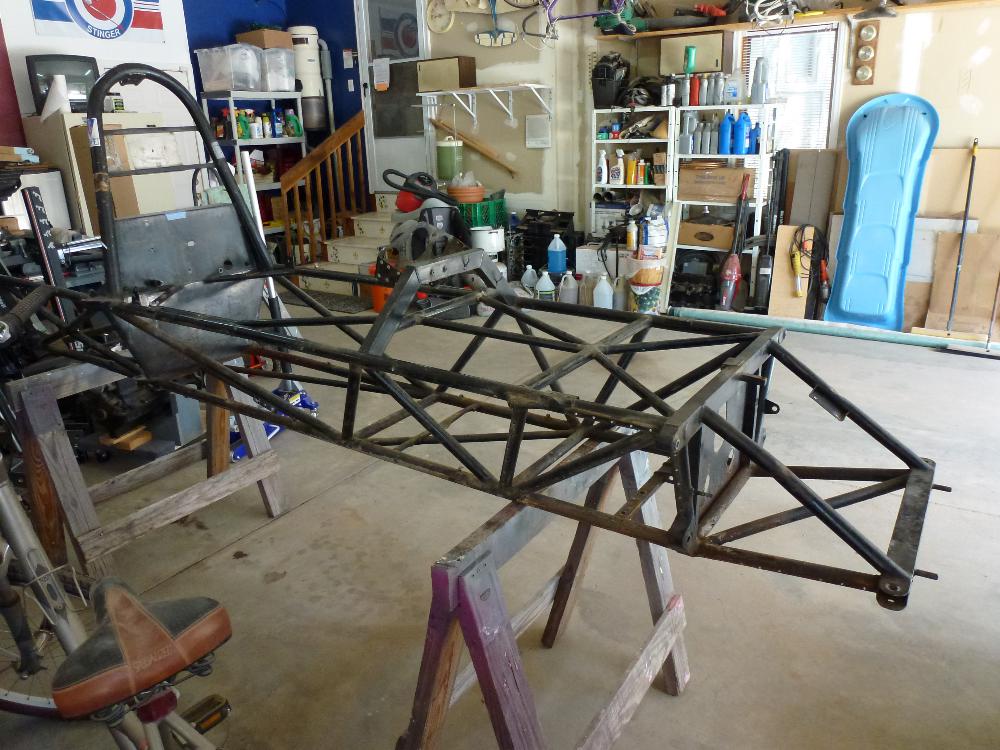
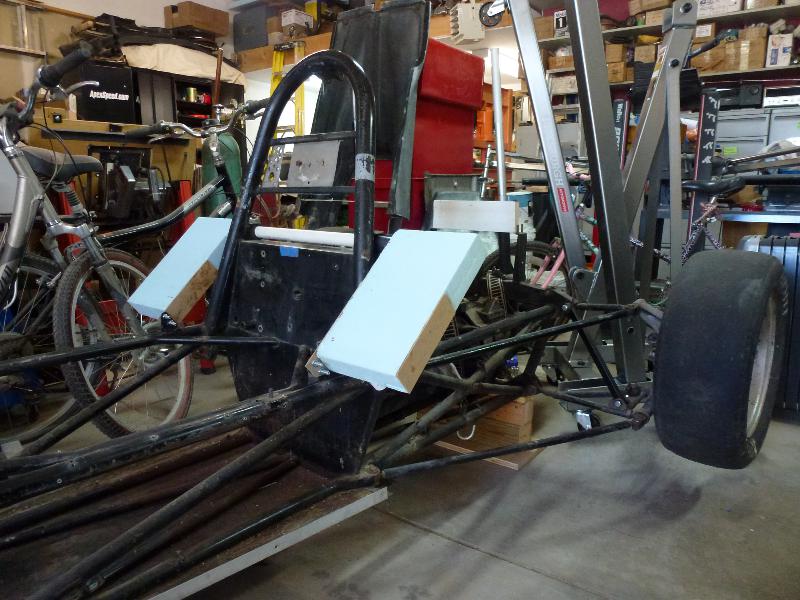
I have attached some pictures of the radiator mockups and some initial templates I have on the tops of the radiator shrouds. The templates were traced from original RP16-38 bodywork by another owner/racer in Austin, Texas. You can also see that I have stripped the paint off of the body down to a very heavy layer of filler and begun to cut/modify the old body. The filler has cracked pretty badly due to cracks in the black gelcoat underneath, so I will remove most of it and fill/reinforce the cracks in the gelcoat. In the two series of radiator mockups attached, you can see the difference in orientation between the stock radiator inclined angle (~36 deg) and a revised angle of ~41 deg. I actually like the 36 degree better as it lowers the CG of the radiator package by an inch or two, although it may not cool as well as the more upright 41 degree configuration. My thoughts right now are to go with the stock angle first and if I have cooling problems, try the more upright angle. All subject to change of course!

P1010520_resized Rads1 ~41 deg

2014 and Lets get back to Work

The winter has been spent doing everything but working on the race cars.  Now that that is done lets see what the list is for the cars:

Mk-10, sent the carburetor to Curtis Farley to have rebuilt, jetted and perform the magic that he does.  He will run the rebuilt carb on the engine dyno to set jetting.  Bilstein shocks are finally rebuilt and will be ready install. Need to order new tires, American Racers for the 2014 season.  Time to nut and bolt everything, realign with the new shocks and set corner weights.

MK8, I am fabricating Al side panels to go along the chassis to ensure that debris, or hot coolant doesn’t find its way into my cockpit.  This came to light from Bill D in Grand Junction, CO when he had an accident that damaged the coolant lines that run alongside the chassis mid height.  He moved his to lower on the chassis and I decide to put a light Al panel to minimize the risk.  Will add some pictures later.  The engine for this car is done and awaits installation. Need to get new bearings for the MK9 transaxle.  Several of those bearings are old needle bearings and newer ones are ball.  Taylor Engineering to help.  I have 2 Bilstein shocks rebuilt for this car.  Still need to more for the front.  Currently old Armstrongs are there and I would like to replace.

Another task that is taking more time is finding some longer 3/8-24″ wheel studs for the front and rear.  The fronts are Triumph Spitfire and they are a bit short when using the Revolution alloy wheels and their sleeve nuts.  The 3/8″ studs are pretty much a dinosaur in favor or 7/16 or M12  wheel studs.  But since I have 3 sets of revolutions and spent the money to true them up I want to stay with the 3/8″ studs.  I have scoured the forums like “www.apexspeed.com” and think I have found a source in the UK.  When that is confirmed I will post that info. 

So that is it for now and off to the shop.

Update on RP-16 by Lowell D. in Colorado Springs

Lowell has updated his progress of restoring the RP-16 he got from me.

“I’ve made contacts with quite a few Royale RP16 owners/racers and prior owners/racers as well as Alan Cornock in the UK who took over Royale from Bob King, and Chris Shoemaker of RoyaleracingLLC in Pennsylvania.  After spending a bit of time trying to track down the chassis number, I believe it to be either #19, or #20 based on several factors, including the gearbox delivery date to Royale as received from Hewland (Feb 6, 1973), the date of manufacture of these two chassis (Feb 1973), and the fact that these two chassis were exported to Dick Schmer (now deceased) of Ft. Collins, Colorado, as this chassis started its racing life here based on the roll bar stamp of “008-152.”  SCCA has no record of early roll bar numbers issued, so they were no help. One or both of these cars also had a shifter modification, where the shift linkage from a Lola was adapted and it looks like my chassis also has this mod.  Another former racer sent me a couple of pictures of “RP16s racing here in Colorado from back in the day,” and both have relocated radiators and cut-off bodywork, similar to mine.  There is another fellow, John Barker, who also used to race and race-prep cars in the Denver area through a company called Performance Racing Developments, that is still looking for a file folder he says might provide some added information. With the early 1973 date of manufacture, the car would be a RP16, as the RP16A did not begin production until 1974 based on the book, “No Place to Hide, The Story of Royale Racing Cars,” by Paul Lawrence – a great read that really gives a lot of detailed insight into the Formula Ford Manufacturing and racing scene during the heyday of the 1970’s.

I have also received a great deal of documentation that was used to get the RP16s accepted by Monoposto Racing as “historic FFs,” confirming the RP16’s made in 1973 were the same models as the ones made in 1972, should that come into question with RMVR.  Bob Alder seemed to think that all should be ok and indicated it would be my choice as to whether to run as FF historic, or CF.

As far as the driveshafts and radiators go, I could get these made in the UK through Alan Cornock, or fabricated here in the US.  An RP16 racer, John Allen (posts on ApexSpeed) in the Tacoma, WA area, has a race fabricator that says he can likely make the driveshafts for about $200 each, given the parts I have.  That doesn’t sound too bad, as I have been unable to find what the correct end yokes should be.  As far as the radiators go, I have dimensions for the originals and should be able to get these made in aluminum for around $300 each.  I will get an exact quote in January.  I’ve also received some recommendations from other racers regarding the plumbing and swirl pot changes that seem to really make a difference in cooling.

Given the information I have, my plan is to make the bodywork parts to shroud the radiators myself.  On another note, I also will need to make a bottom mid-section out of fiberglass as the original cars had.  This car had the lower mid-bodywork and undertray replaced.  It looks like they bonded the undertray  to the chassis with silicone rubber in addition to the rivits, so maybe the rust will not be too bad at that juncture.  The lower mid-section is a “U” shaped piece that runs from around the front bulkhead to the roll bar bulkhead.

Upon further inspection of the chassis, I found another bent tube on the driver’s left side that looks like a result of being “t-boned.” The bend is not too bad, but will require some repair. I should get the frame stripped soon and will take it to J. D. McDermott’s shop, Front Range Motorsports, in Aurora, CO to see what he will charge to get it in good shape.”

Interesting info RP-16

From Lowell D after he got the car home to Colorado Springs , CO.

“Also checked on the roll-bar stamp, 008-152.  SCCA region 8 is supposed to be the Colorado region, so it appears the car initially started racing here in Colorado.

Found out some interesting information on the engine in the RP 16.  I googled the casting number, 831C 6015 R34, and it appears that it is an uprated engine, from a South African “Sierra.”  Although most of these blocks were cast with an “AX” on them, some were not.  Supposed to have been produced after the 711 series block and weighing about 10 lb more.  Used quite a bit in British Formula Fords and supposed to have the HD maincaps. ”

Keep up the good work Lowell

Back from the RMVR Vintage Race Weekend

June 1-2, 2013 we participated in the Rocky Mountain Vintage Racing (RMVR) race at Pueblo Motorsports Park at Pueblo, Colorado. Had some 20+ FF’s. Haven’t raced on this track in at least 2 years. The new surface was great.

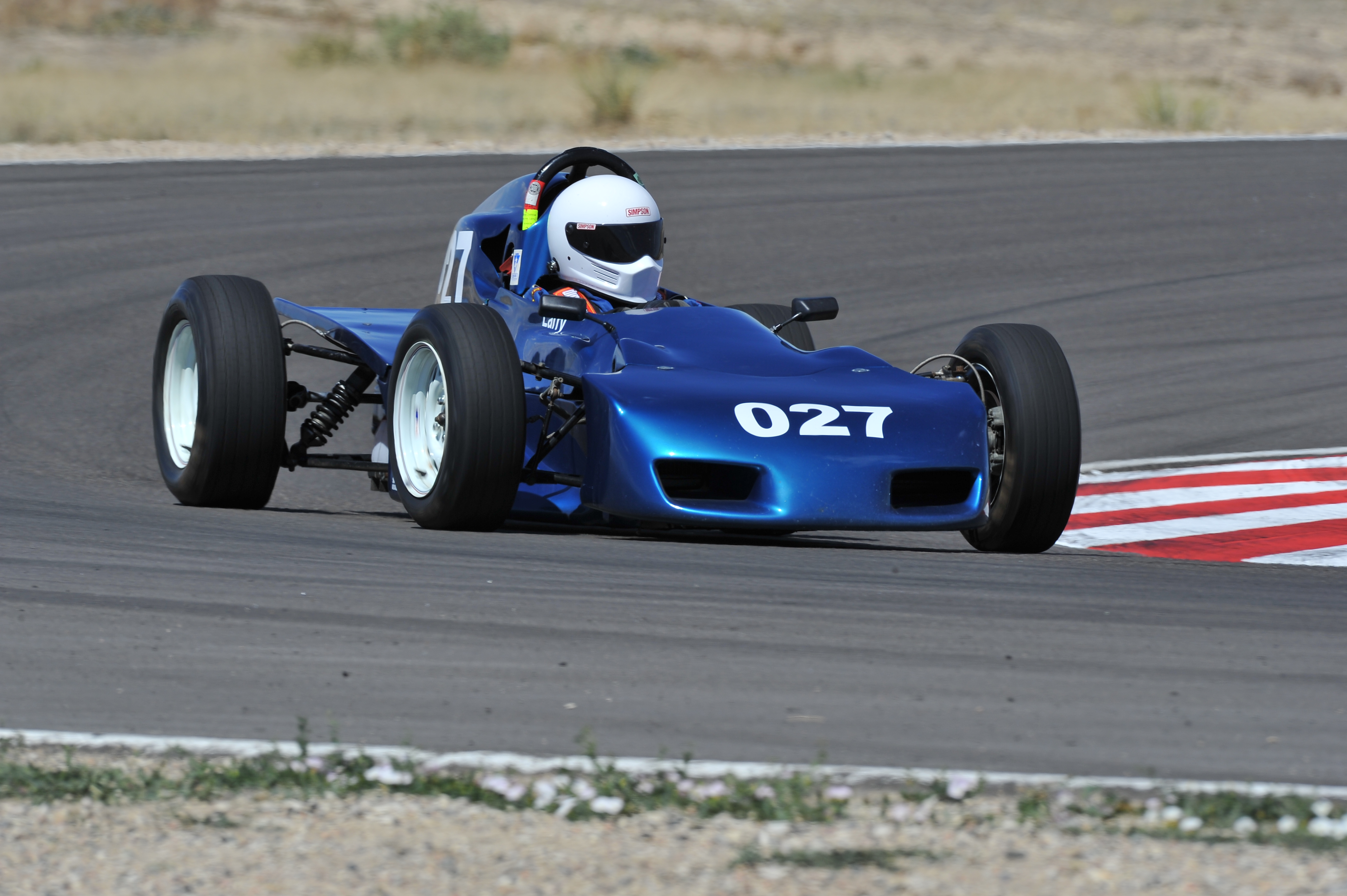
Took the Elden MK10 with the Falconer body. Second race weekend. Car ran well but still unhappy with the rear brakes. Can’t seem to get them to do their fair share. Engine ran good pulled 6100 rpm on the 1/2 mile straight at 5500 ft elevation. I didn’t have any parts failures so all in all it was a good weekend.RMVR Pueblo Motorsports ParkPictures shot By Rupert Berrington Action Photography

Time to Race the Elden MK10

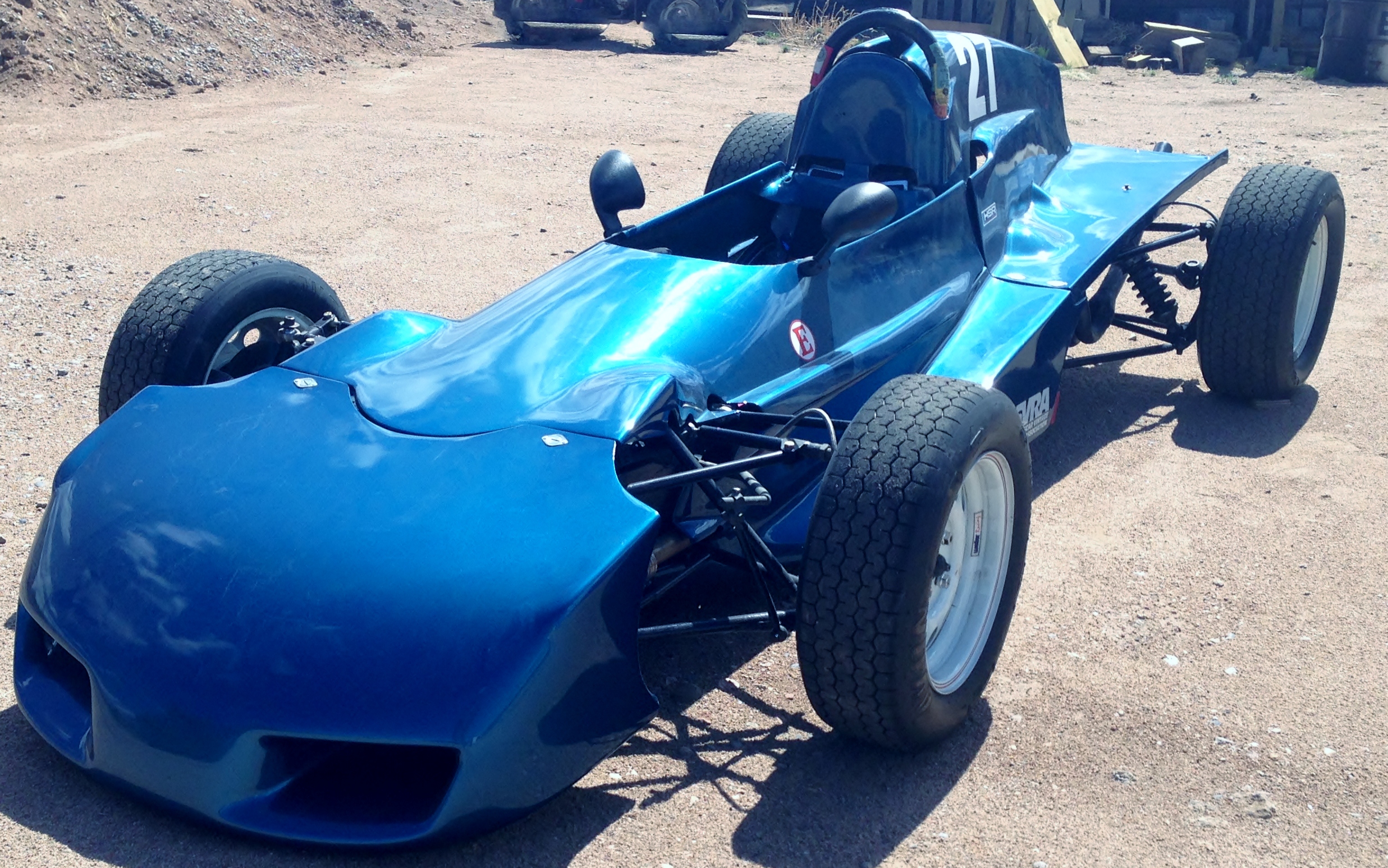
We took the MK10 Falconer out to the last vintage race in Albuquerque, NM on April 27th. Won the class, well I was the only finisher, but I scored a WIN!  Anyway the engine was running very lean, and the brakes were there but not awe inspiring.  So I kept the laps down and came home to work on the car.

Replaced all the master cylinders with new.  I had rebuilt the old ones and I swear I have not had that bad of luck before.  Rebuilt the carb and rejetted.  Moved the shoulder belts mounting point so as to fit the HANs device properly. Built a new dash as the original dash has the gauges down and behind the steering wheel and I wasn’t comfortable with that.  So made a paper etmplate and then a new Al panel with the gauges higher up above my hands.  The Falconer body allows this configuration but the MK8 will not so I guess I had better get used to the original configuration.

Car is down and loaded into the trailer.  Racing in Pueblo, Colorado with Rocky Mountain Vintage Racing:  http://www.rmvr.org, http://www.pueblomotorsportspark.us, this weekend  Looking forward to seeing other Elden’s and more Formula Fords.  Can’t wait.Image

Adding to the H-Mod family: Fibersport-Crosley

Fibersport Crosley EngineWith the help of Mike S from Iowa, I have acquired the 1956/57 Fibersport-Crosley. Mike bought the car off e-bay last year. He contacted me about selling the car and I said yes.
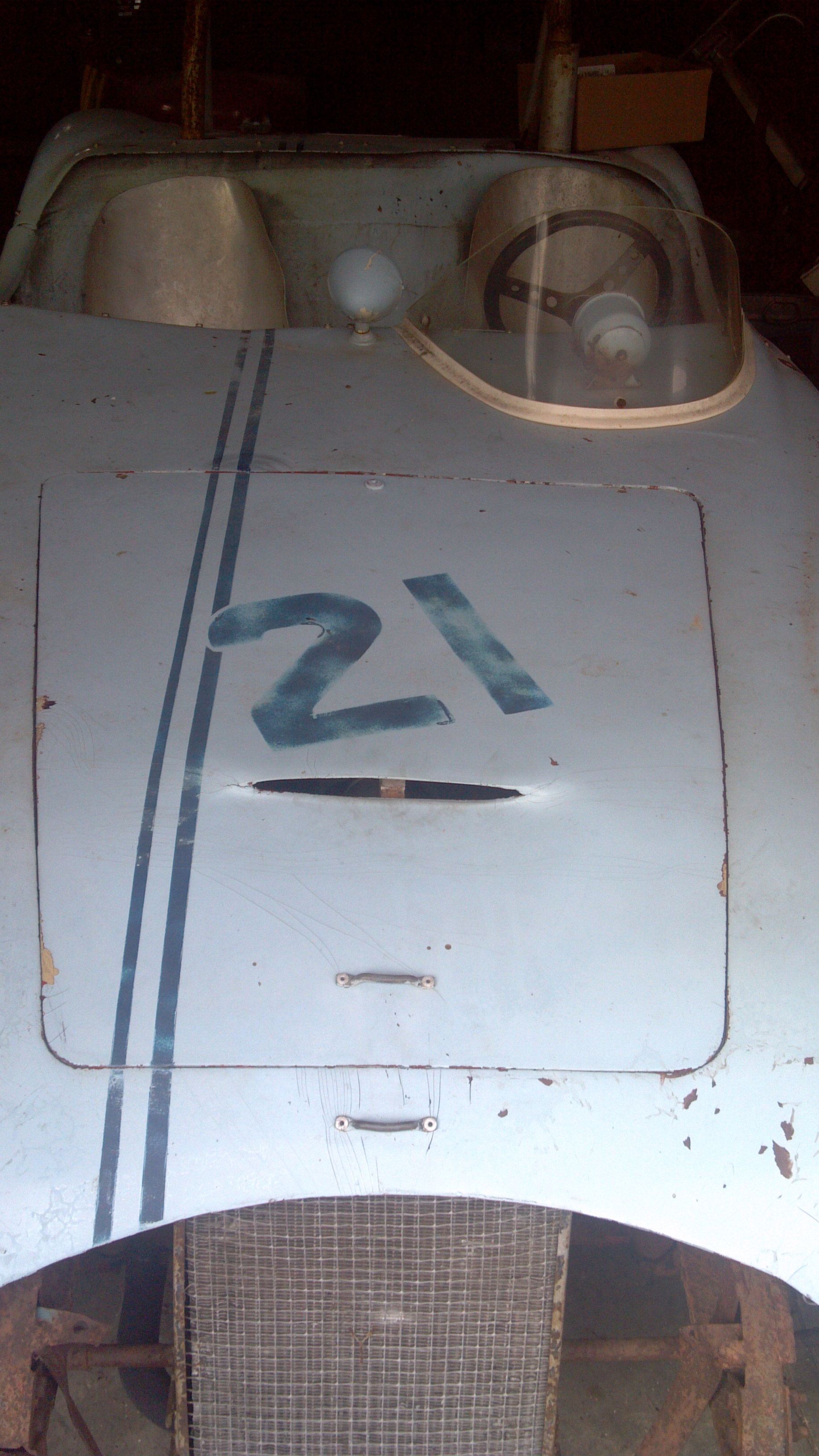
The car sure has the lines of the flat sided Fibersport but was bobbed on the front and rear at some point. Also there is a crease in the sides from the wheel opening to the bottom of the chassis near the doors. This looks like it may be from some de-lamination of the fiberglass layers. Compared to the Siam Fibersport body this one has a fiberglass floor, front and rear bulkheads; bolted to the Crosley frame.

The chassis appears to be Crosley Hot Shot with many holes drilled into the frame to lighten the frame. Engine is Crosley, transmission 3 speed Crosley and rear axle is Crosley. Front tire rims are 12″ Crosley and the rear tires are 14″, need to figure out what wheels are. The 14″ tires are needed to offset the high rear gear ratio of the Crosley diff.

I am going to do some digging in the “web” of the frame on the passenger side to see if I can find a Crosley VIN. That will help determine if he chassis is Crosley or custom.Fibersport Crosley Front shotFibersport Crosley Front

Period Pictures of the Newest Elden

Thanks to Jay Davis, the second owner of the Elden MK10C I am posting some of his pictures he was gracious enough to share.  I was most interested in radiator location and attachment points for the same.

One of the question Jay answered for me was if the car came with an original Piper engine.  In the pictures there is a Piper cast aluminum oil sump, Piper oil pump, Piper velocity stack and Piper valve cover.  I have all but the Piper valve cover which Jay says he still has.  Also Jay says that the original block had some weird gob of weld/epoxy covering block damage.  The block I have from the car has two areasImageImage that have repairs from internal shrapnel. Also the cast oil sump shows the same.  So I believe I have the original engine in the car and plan on using it. 

Adding to the Collection, Elden 1974 MK10C

Just returned from Oklahoma City where I picked up a 1974 Elden MK10C that a restoration was started.  Thanks to Tim H. he had a nice start to the restoration of chassis # AM 73-79.

Elden Mk10 - 001-Small A quick review of the SCCA Log Book show’s Gary Hackbarth was the original owner and raced the car in CenDiv bringing a 1974 Regional Class Championship (notebook entry not verified by SCCA) [23 races in 2 years].

Additional owners: Mike Piccone, Jay Davis, Ron Eilken, Dana Moudy and Joel Evans, Brian Goellnicnt, Steve Carbone, Steve Barton and Tim Henson.

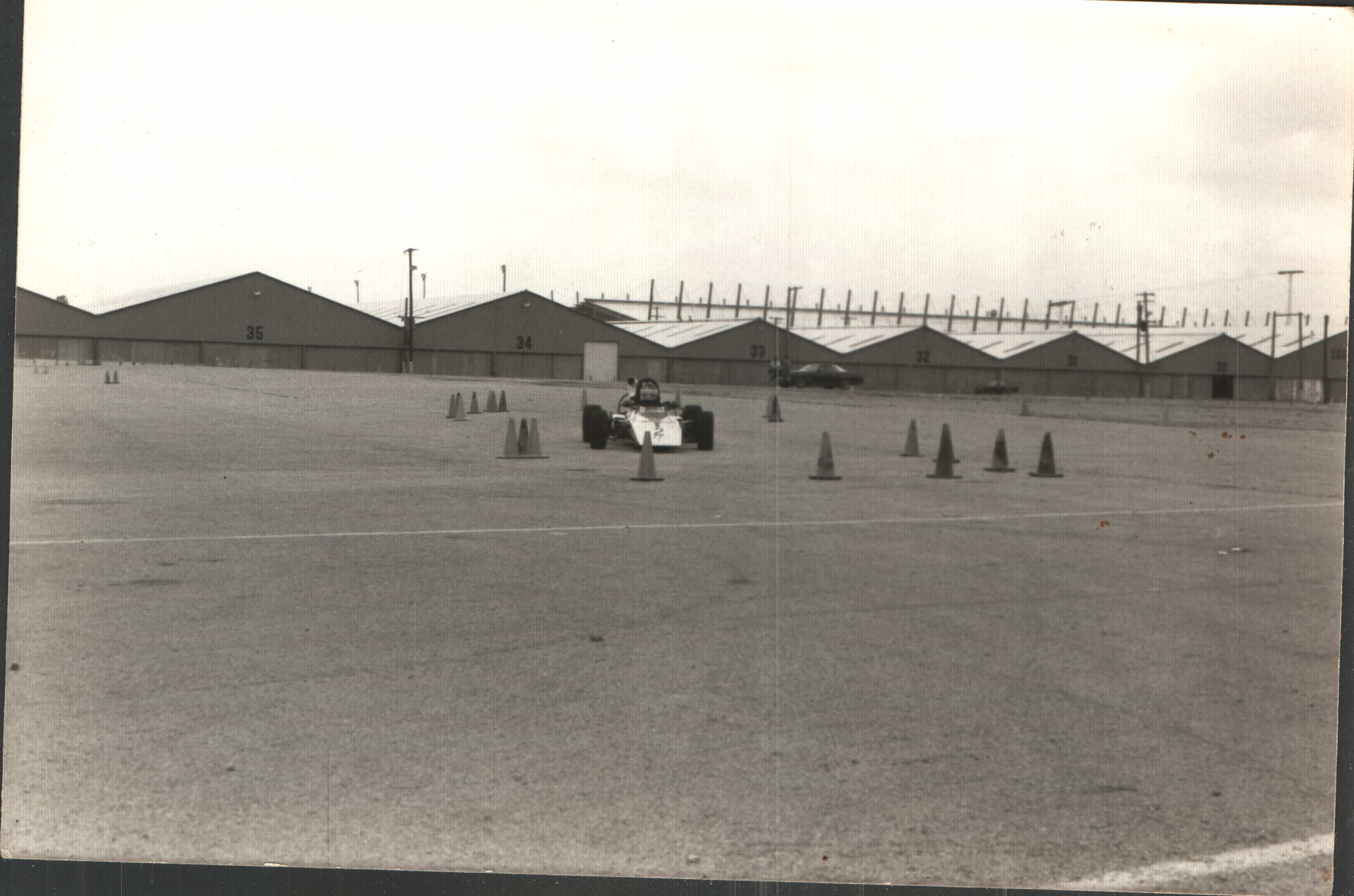
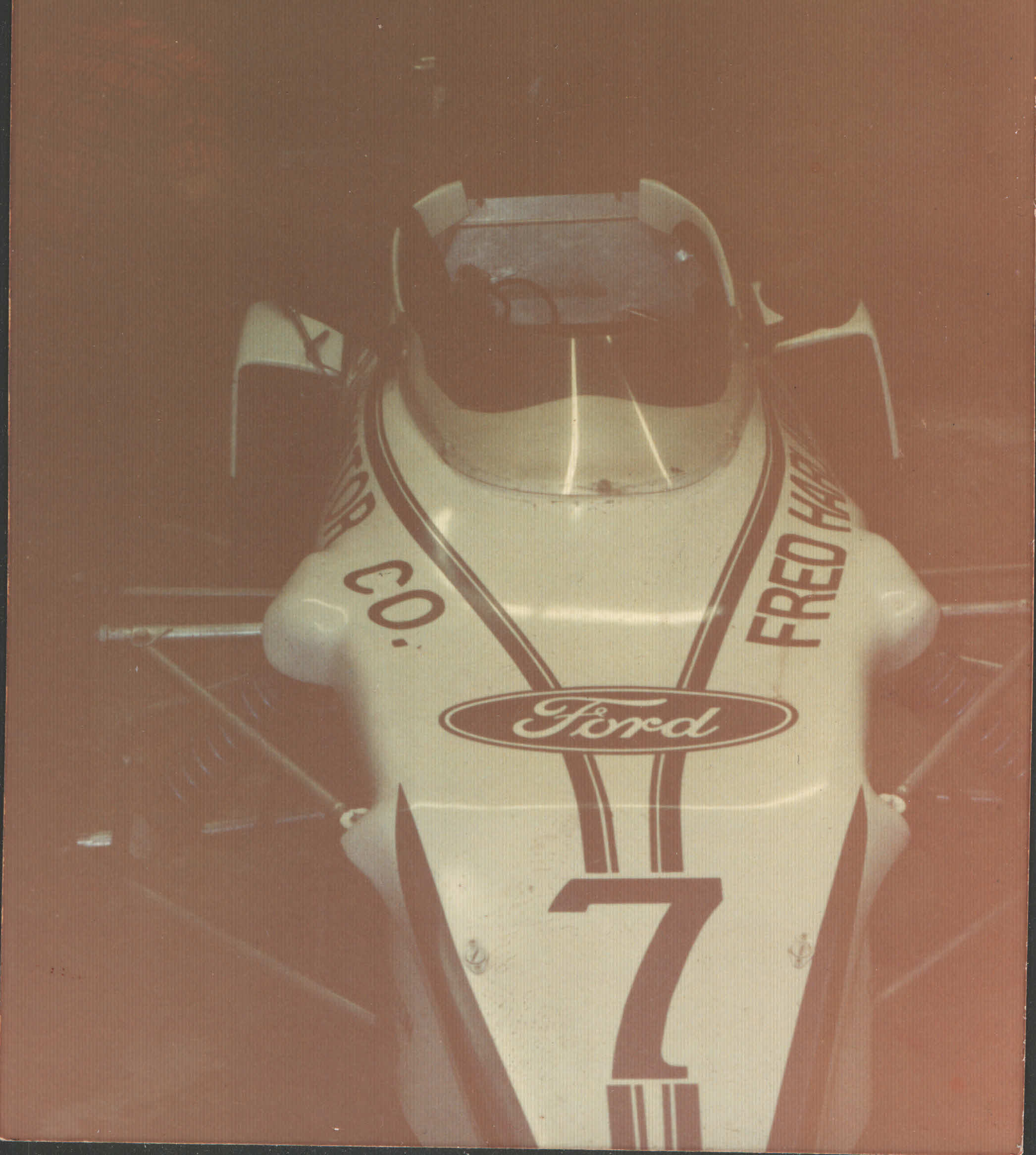
One of the mysteries I am trying discern is the original location of the radiators on this car.  (Current location was done by the last owner for his application)  Pictures of the car in 1985 found in the second SCCA Log Book:  SCCA #2 pictures p2-3   don’t show the radiators, but leaves you to assume back by the seat area.   In a solo picture shows a wedge nose and appears to have the radiators on the sides but where?  1985 car at Solo event with rad shrouds visible  But then I have pictures showing the near the middle of the car but with a more pointy nose:   Car #7 Front View rad at rearAny help here would be great.