11/1/11
Order: 2 rubber donuts, rebuild kits for all calipers and master cylinder, and caliper cross feed seals:
11-12-11
Began disassembly of all 4 calipers. Had to hydraulic the pistons out using grease. RR caliper had two bad pistons. Orde
11-13-11
Rebuild all calipers and master cylinders. Front and Rear Brake Master Cylinders were in pretty good shape. Clutch master cylinder was very dirty and had allot of debris in the reservoir.
11-14-11
Dropped off all 4 rotors off to be turned. Fronts ok but he said LR was not true and he worked hard to true it again. Fronts are Spitfire, rears are ?????? Confirmed LR has to much runout.
Completed master cylinder installation. Bled Clutch Master Cylinder, appears to work ok.
Reinstalled LR Rotor and caliper, drilled bolts for wire.
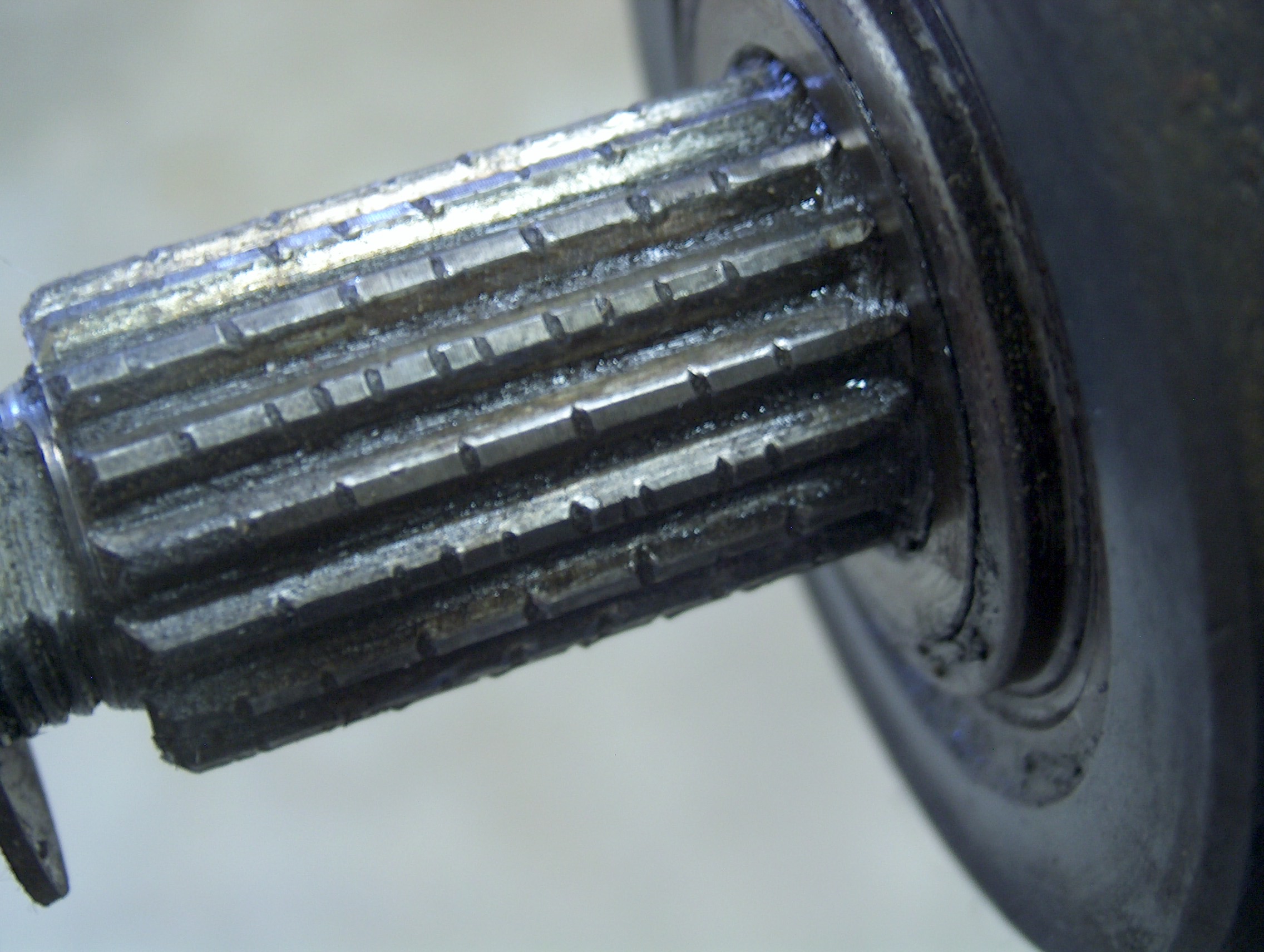
Reinstalled new Rubber drive donut on Left Rear. At issue is the amount of spacers used. There were 3 washers on all 6 bolts but there seems to be none needed. Disconnected LR shock to allow full droop and bound to see that the donut is neutral at normal ride height. Pictures show half shaft at -5-7deg without driver. So seems this setting is okay.
Began to relocate battery from RR of the engine bay to drivers compartment. Move the Fire Extinguisher closer to the center of the car and then mount the battery. Look into building a fiberglass panel to cover these two items. See pictures/drawings.
11-21-11
Catching up: Worked on shaping a battery/fire extinguisher cover using blue foam to make plug.
Drained old oil from sump and changed filter, CarQuest 85342. Put in 5 qts 30 wt non-detergent and 4oz of Zn additive from Redline. Took sparkplugs out and removed valve cover applied Valvoline High Zn motor oil lavishly on components and allowed oil to drain down to cam. Spun engine over without sparkplugs to build oil pressure. Pressure was very slow to build up, worry Al Morris informed me of;
“I always thought that the 2 lines from the oil sump tank could be switched. It took too long to get oil pressure when we changed oil.I would spin the oil pump. Check that…. Al”
Indeed it took several minutes of spinning the engine with the spark plugs out before I saw oil pressure. Actually started pulling lines to filter etc to see if oil was flowing and was very disappointing. Finally got oil pressure 40# cold at starter spin rpm. This oil pump is an Cosworth 5 port.
11-21-11
Call Peter Hampsheir today:
Questions: 1) where to find frame stamps: top rear bulkhead left hand side should be AM 73/xx as ex:
2) Difference MK8 and MK10 Mark 10 had a taller rear bulk head to accommodate the inboard brakes, also a bit of a kink in the cockpit area
12-9-11
Catching up
1) Oil Pressure issue resolved. Found that the sump feed line to the Cosworth oil pump is a rubber line a ¾ “ hose between the sump and the pump. At issue was the slip fitting at the sump is ½ “ and the pump was modified to be ¾ “. The rubber hose was loose at the ½” , compressing a ¾’ hose down to 1/2′ and setting for 16 years the rubber was hard and leaking air. Replaced for now with a ½” ID rubber hose. Need to find a suitable reducing hose.
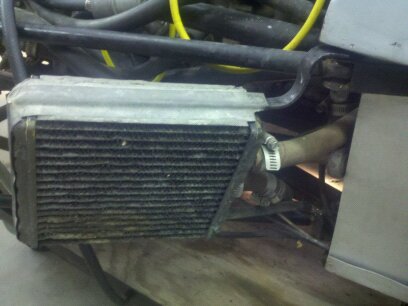
2) Cleaned radiators found 1 qt of water in the left rad and plumbing. Subsequently corrosion found in brass lines etc. Cleaned and flushed all lines replaced 1 ½” connecting rubber lines. The hoses from the water pump to the right rad transfer line is a series of brass fittings and rubber hoses to make the down turn and adapting from 1 ¼” fittings to 1 ½” lines. John Hammil to fabricate Al lines to eliminate the series of hose clamps etc. Also from the thermostat housing to the swirl pot allot of corrosion. Again from the swirl pot to the 1 ½” line to the left rad is a series of rubber connector’s adapters etc. John Hammil to fab replacement.
2) on 12-7-11 attempted to fire the engine. No Spark found. Resolution was the points had corrosion present. Filed them for now and had spark. Engine started immediately. Good oil pressure 60 psi at idle with 30wt non-detergent oil. Found water leak at the back of the engine. Freeze plug has a hole in from water standing in engine. Water pump has small leak also. Stopped engine. Later removed water pump and found allot of corrosion debris in the block. Need to decide solution
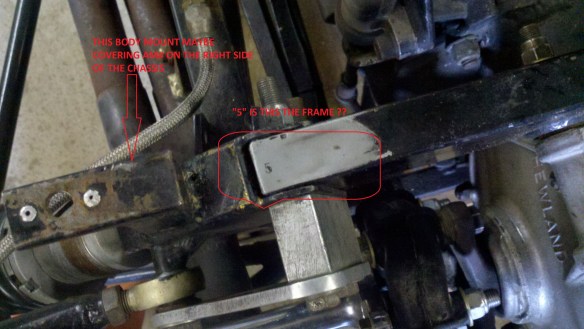
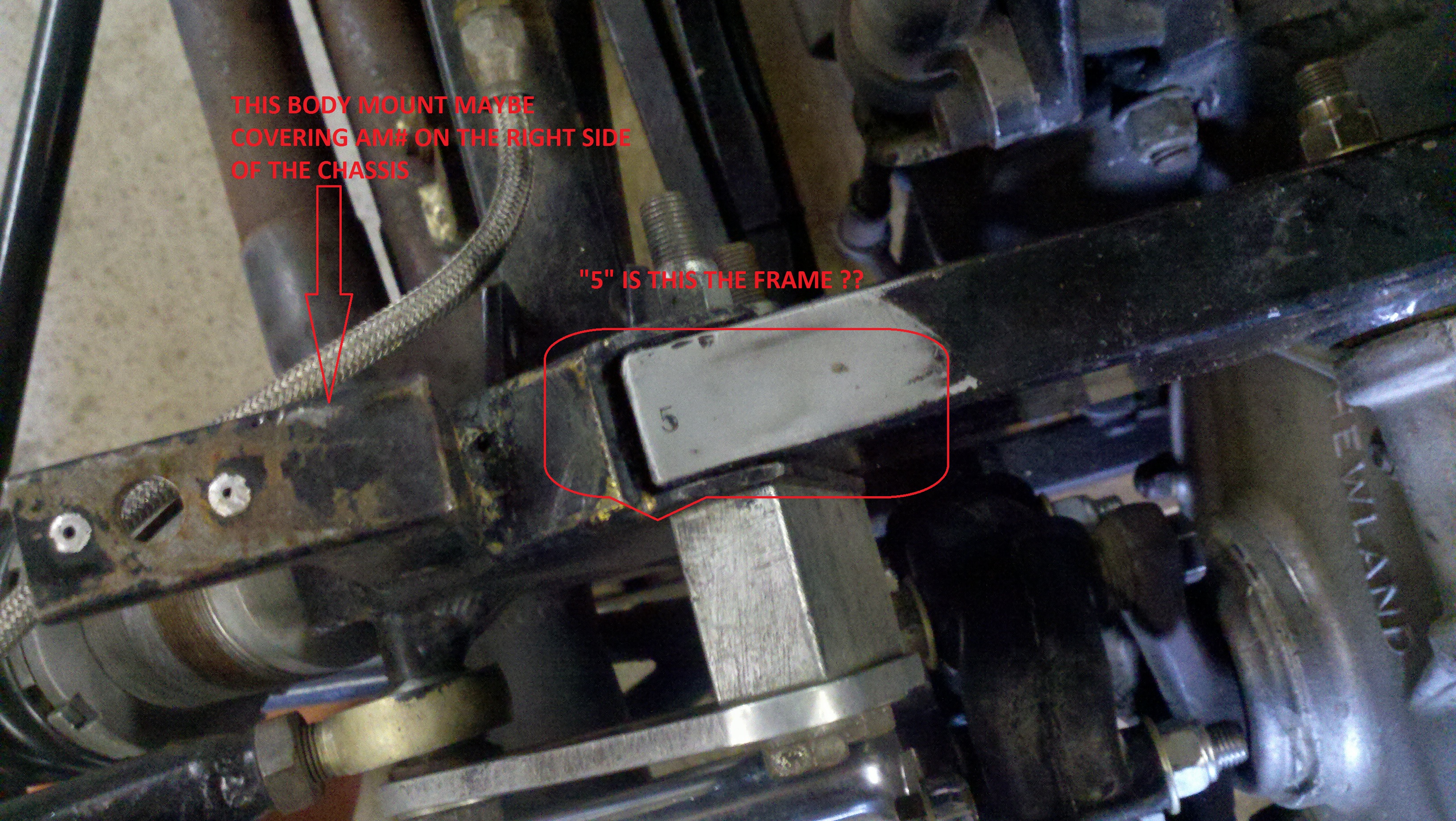
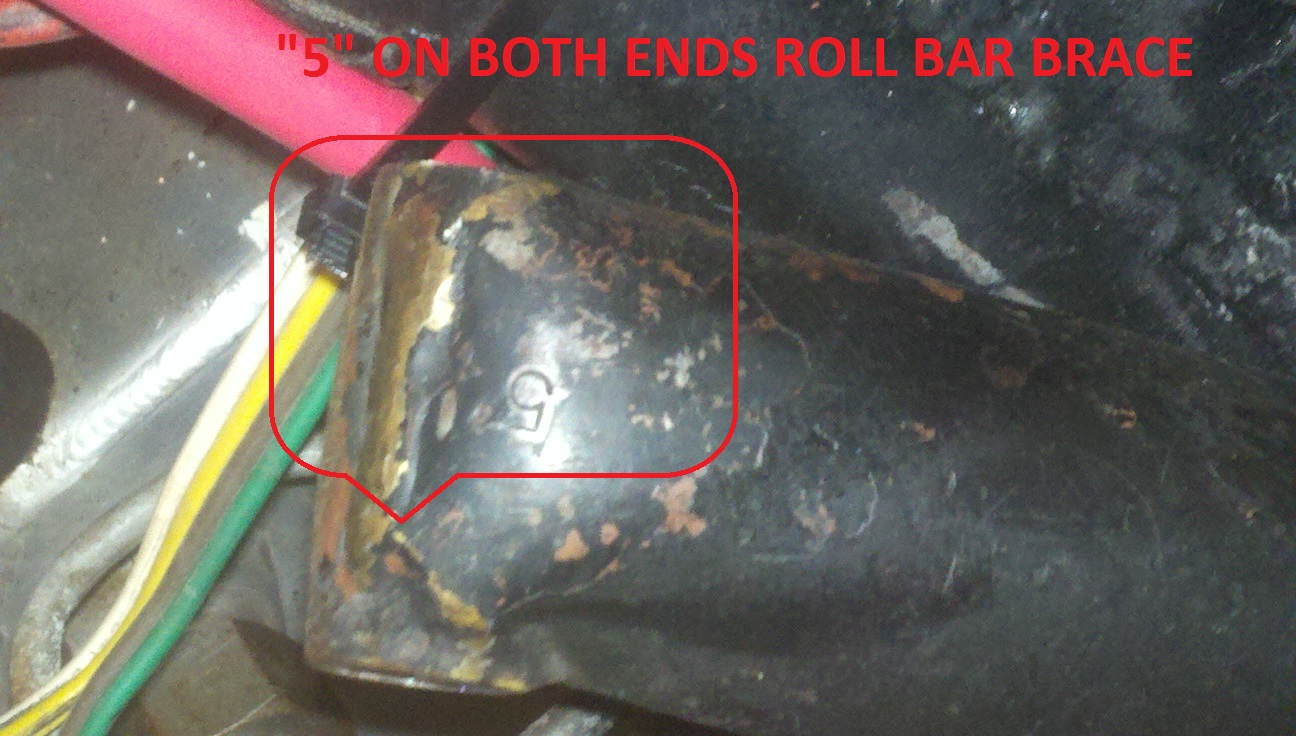
3) Removed engine and trans to work on freeze plugs and water pump. 4) On the frame # issue. Al Murray suggested a few locations to find frame #’s, rear cross member and rear roll bar support. Dissolved paint on those area found a single number in both places “5”.

5) The original fuel cell in the car was severely degraded. Thus a new one was designed and contracted to Harmon Racing Cells. To be delivered in Jan 2012.
12-23-2011
Catching up again.
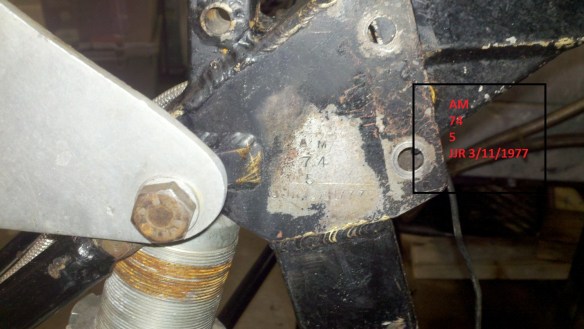
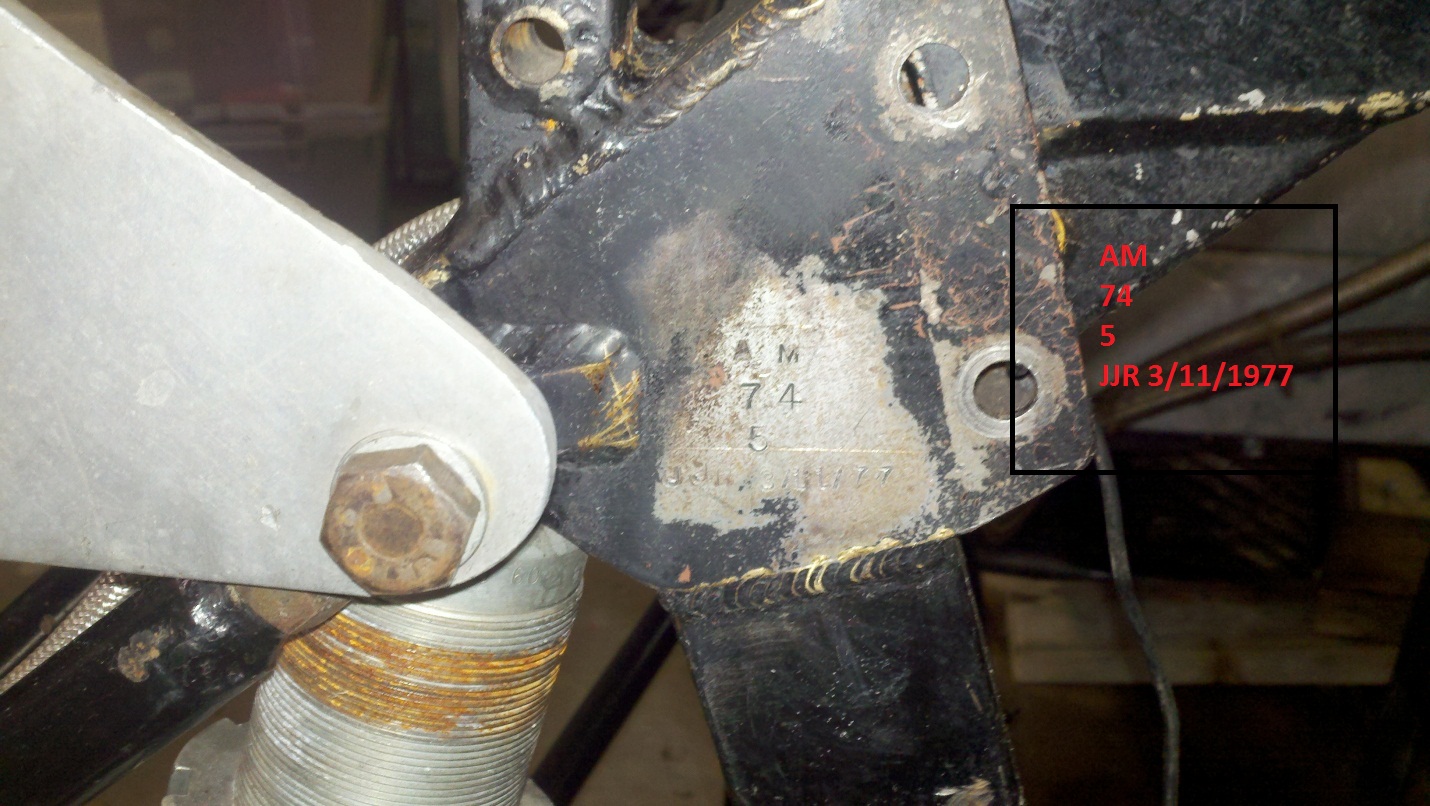
1) Upon removing engine and cleaning up the engine bay Allan D. found the frame #’s!! (Left rear transaxle bulkhead.) AM 74 5 and JJR 3/11/1977
2) Engine
- Ordered new water pump 1973 Ford Pinto Carquest# NWP 51-1542
- The toothed water pump pulley is severely worn. It is a 22 tooth and the crank is a 22 tooth also for a 1:1 drive. Decided to replace with 44 tooth on the water pump and 30 tooth on the crank to become a 32% under-drive to help with cavitation at max RPM’s.
- Replaced freeze plugs and flushed as much debris out of the coolant passages.
- To add the new 30 tooth water pump pulley on the crank requires new front/rear oil seals and timing and rear cover seals. Ordered/Installed
- Removed the old 22 tooth pulley off the old Water pump by attaching puller and heating aluminum pulley to swell and remove
- Heated the new 44 tooth pulley in the oven to 300deg F and pressed onto the new water pump.
3) Chassis
- As the engine is out, removed the oil tank to clean and replumb.
- Re-plumbed all the new oil lines. Using AN to push on fittings and blue Aeroquip ½” ID hose.
- Moved the oil filter from behind the left engine mount due to interference of the fittings and the motor mount and the oil filter with the oil pan. May have been okay but I didn’t like it. So assembled the engine in the bay and attached headers etc to find a location in front of the left engine mount. Fabricated new mount and completed plumbing.
- Removed the left rear shock found that the spacers to the shock end has been lost and the frame parts are “squashed” to tighten the ½” bolt that supports the shock and upper rear link.
- Coil spring is unmarked of lbs/in so calculated: 7”tall 2.6”dia 7.5 active coils with 0.39” wire dia make the spring approx. 260#
- Left rear shock is Bilstein 180/60 Serial # 29711148765, no leaks use as is.
- Right shock is Bilstein 180/60 Serial # 3163515869, no leaks us as is
- Need new rubber shock bump stops. Old ones are red 1.25” tall, 1.7” dia, rod dia 0.43”
4) Installed Right rubber donut on Hewland
5) Need competition Seat Belts,
12-28-2011
Update
- Completed oil line plumbing
- Repaired the left rear shock mount area. There is no shim between the shock top and frame parts so every time the large ½” bolt is secured it would deform the metal. See picture and drawing. See 3(d) above
- Pulled rear brake rotor to try and determine size and replacement. The rotor has #’s 1DA178(or9)23 and 101.5676 Disk is 10 1/8” dia Bolt circle 4 on 100mm, 2” thick. Bottom of hat is nearly 5 ¼”od. This is not a standard old FF rotor. Sunbeam Rapier was the donor car per Peter Hampsheir. Will send to john Hammill to see if he can correct as we look for replacements in the UK.



 LCH Restorations